Filter Teardown 101: DE vs. Cartridge vs. Sand for Pool Filter Cleaning in Frisco, TX (When PSI Spikes in Summer)
When the Frisco sun bakes your backyard from late May through September, pools work overtime. Water temps rise, sunscreen and dust build up, and the PSI on your filter gauge can climb fast. If you are noticing sluggish returns or a pressure jump above your normal baseline, it is time to look at the filter itself. For a smooth swim season, many homeowners schedule professional care through our pool cleaning service so issues get fixed before they snowball.
Why High PSI Hits Frisco Pools in Summer
North Texas summers bring triple‑digit heat, wind, and long swim days. In neighborhoods like Phillips Creek Ranch and Panther Creek Estates, fine construction dust and cottonwood fluff load up filter media. Frequent parties increase body oils and sunscreen in the water. All of this makes your filter work harder, which shows up as higher PSI and weaker water flow. Ignoring a rising gauge can strain pumps and shorten equipment life.
How Each Filter Handles Summer Stress: DE vs. Cartridge vs. Sand
DE Filters: Finest Clarity, Fastest To Clog
DE grids trap the smallest particles, which is great for clarity during pool‑party season. The tradeoff is that those same fine particles, along with lotion and pollen, can cake the fabric quickly. Around Frisco, many pools benefit from more frequent professional cleanings during peak heat, with the technician checking grids, manifold, and o‑rings for wear. Do not add extra DE if PSI is already high; that can make pressure worse and mask the real issue.
Cartridge Filters: Simple Design, Big Summer Workload
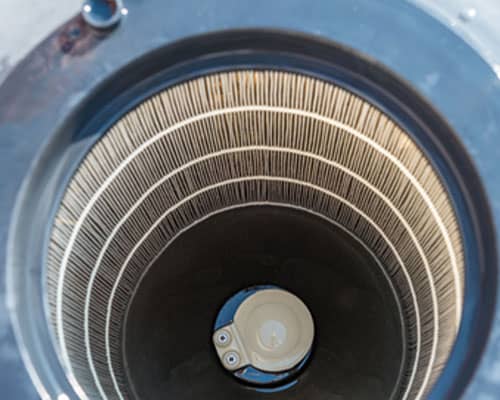
Cartridge systems are common across Collin and Denton counties. They offer large surface area and gentle flow, but they load up with dust and organics when swim traffic spikes. Even if the water looks clear, a steady rise above your normal PSI often points to cartridges that are saturated or starting to separate at the end caps. A pro teardown includes careful inspection for tears, collapsed pleats, or a sticking air‑relief valve that can push pressure up.
Sand Filters: Durable, But Not Set‑And‑Forget
Sand units handle heavy debris well, but they are prone to channeling when media is exhausted. In North Texas, replacement intervals vary by use and environment, especially after storm seasons with lots of silt. If PSI stays high right after a backwash, your technician may find clumping, calcification, or worn laterals. A full teardown lets a pro confirm whether a deep clean or media change is the right move.
When To Schedule A Professional Filter Teardown In Frisco
Every pool has a “clean” PSI baseline. What matters is how far you drift from that number during summer. Call a pro if you notice:
- A pressure rise of 8–10 PSI above your normal clean reading that does not drop after routine service
- Strong pump noise with weak return jets or a thin spa spillway
- Air collecting under the pump lid or frequent priming issues
- Short filter cycles after storms, wind events, or heavy pool parties
Do not run your system if PSI jumps 10+ above normal. That load can overheat a pump and stress seals. A professional teardown isolates the cause and protects your equipment before damage spreads.
What A Pro Examines During A Teardown
Your technician is not just rinsing parts. A full teardown is a targeted inspection that looks for the root cause of rising pressure and poor flow:
- Gauge accuracy and air‑relief operation
- Pump basket fit, lid o‑ring condition, and suction leaks
- DE grids or cartridges for tears, collapsed pleats, broken manifolds, and bypass paths
- Sand filter laterals, standpipe, and signs of channeling or calcification
- Multiport or backwash valve wear that can restrict flow
- Return side restrictions at check valves, heater exchangers, or salt cells
The goal is to restore proper flow at a stable, healthy PSI so your pool stays clear through holiday weekends and heat waves.
A North Texas Seasonal Playbook For Filters
Frisco’s climate rewards a proactive rhythm. Here is a simple way many homeowners plan professional service around the weather curve:
- Early Spring: Baseline the gauge with a deep professional cleaning before the first big warm weekend.
- Mid‑Summer: Recheck during the hottest stretch when swim traffic, sunscreen, and dust peak.
- Post‑Storm: If a storm dumps debris or silt, get a quick assessment to keep PSI from drifting up.
- Late Fall: Prep for off‑season so spring startup goes smoothly.
For additional local context and seasonal advice, browse recent posts on pool cleaning tips from The Neighborhood Pool Guy.
DE, Cartridge, Or Sand: Which One Stays Happiest In Frisco Heat?
There is no one‑size‑fits‑all answer. DE gives the best polish for backyard parties but needs the most attention when dust is heavy. Cartridge systems are quiet and efficient but can show sudden PSI spikes if pleats get matted with sunscreen. Sand filters ride out leaves and larger debris the best, yet benefit from periodic deep cleaning or media refresh when summer clumping shows up. The right plan depends on your yard, trees, wind exposure, and how often you swim.
Neighborhood Factors That Affect Your Filter
Local surroundings play a big role. Starwood and Stonebriar have mature trees that shed pollen and fine organics. Phillips Creek Ranch and communities near new builds can see persistent dust that loads media. Homes along Eldorado and Main often catch cross‑winds that carry grit into the pool. Sharing this context with your technician helps them match service frequency to your backyard’s reality.
What You Gain With A Professional Teardown
A proper teardown is more than cleaning parts. It is an equipment protection service. A technician restores flow, clears hidden restrictions, and confirms that seals, gauges, and valves are healthy. That keeps your heater and salt cell happier, reduces runtime, and helps stabilize chemistry so you are not chasing clarity during the hottest weeks. Cleaner water with less equipment stress is the payoff.
How Often Should DE Grids, Cartridges, Or Sand Get Attention?
Intervals vary by pool size, swim load, and backyard environment. In our region, pros often recommend more frequent inspections during peak summer, with additional service after major wind or storm events. DE grids and cartridges see the biggest seasonal swing because fine dust and sunscreen pack in quickly. Sand media lasts longer but may need a deep clean or change when channeling or clumping is confirmed. Your clean PSI baseline is the guide to whether it is time for service.
Stay Swim‑Ready In The Heat
Want fewer surprises when the gauge starts creeping up? Book a professional visit with The Neighborhood Pool Guy and have a certified tech evaluate the whole system. Many Frisco homeowners keep things simple by using routine pool cleaning that includes inspection and scheduling around our summer spikes.
Ready To Enjoy Clear Water All Summer In Frisco?
If your returns feel weak, your PSI is running higher than normal, or you are getting ready for a big weekend, we are here to help. Call 469-989-3728 to talk with a pro at The Neighborhood Pool Guy, or learn more about pool filter cleaning in Frisco, TX on our home page. The fastest way to get ahead of summer stress is to schedule a professional teardown and service plan that fits your yard and swim habits. Contact us now for pool cleaning in Frisco.

HAVE YOUR GO-TO POOL GUY BE THE NEIGHBORHOOD POOL GUY IN FRISCO & SURROUNDING AREAS